


In my last post, I wrote about my first sighting of a bottlenose dolphin. It was the late nineties in my small university town in Wales. While these were definitely the closest encounters I’ve had with dolphins, they weren’t my last. Over 25 years later (momentary pause while I redo the maths and deal with the overwhelming disbelief), I still live on the coast, although now back in my hometown in the North West of England. The beaches here are not lined with the pretty multi-coloured postcard-perfect houses of my university days. These beaches sit between two large estuaries. Here, at low tide, the sand stretches for miles before you reach the water’s edge. These are beaches dotted with quicksand and in parts, the sand gives way to the estuarine mud and the vegetation of the salt marsh—an endless bone of contention for many residents who see the beach, not as a dynamic ecosystem, but as a tourist attraction that the local council have failed to preserve.
I don’t make it down to my local beach as often as I should. At this time of year it’s cold and windy and I prefer the woodland, but when I do venture to the shore, I take my binoculars with me. The salt marsh and the mud of the estuary provide vital feeding grounds for over a quarter of a million migratory birds that overwinter here and the birds of prey that hunt them.
For years, out of habit, I would scan the water through the binoculars, hoping to see something unusual, but never expecting to. The beach stretches into the distance in either direction. There’s such a ridiculously large expanse of sea to scan, beyond the occasional grey seals who come close to shore and are relatively easy to spot, the chances of seeing anything on the water are slim.
So it was all the more remarkable when about two years ago, I stood on the beach, lifted my binoculars to my eyes, and in the exact circle of water I was pointing them at, a dark dorsal fin emerged.
“There’s a fin,” I remember saying to my husband in a calm voice as if it was an everyday occurrence, as if I hadn’t just completed the world’s most challenging Where’s Wally. The dolphin was some way off shore and hard to keep in the field of view, but we must have watched him for about half and hour as he made his way along the coast.
A few weeks later I sat in the sand dunes, binoculars in hand, knowing it was a dolphin day. The high tide, flat seas and still air combining to form perfect dolphin-spotting conditions. And sure enough, there they were. A mother and calf! And most recently, I saw one individual breach, fully clearing the surface of the water before side-slamming back in with a triumphant splash. I still find it hard to believe I can see cetaceans behaving like this while walking the dog a couple of miles from my front door.
I say cetaceans because it’s not always possible to say with certainty what species they are. The first individual I saw was a bottlenose dolphin. It’s size alone gave it away, but also the clear curved hook of its dorsal fin. And while people tend to think of dolphins as social animals, travelling in pods, that’s not always the case. Bottlenose dolphins have a sometimes fluid social system, with members of the group changing over time as juveniles reach maturity and seek out new pods. Individuals may also be ostracised following injuries or illness. Dolphin attitudes have some way to go it seems when it comes to disabilities.
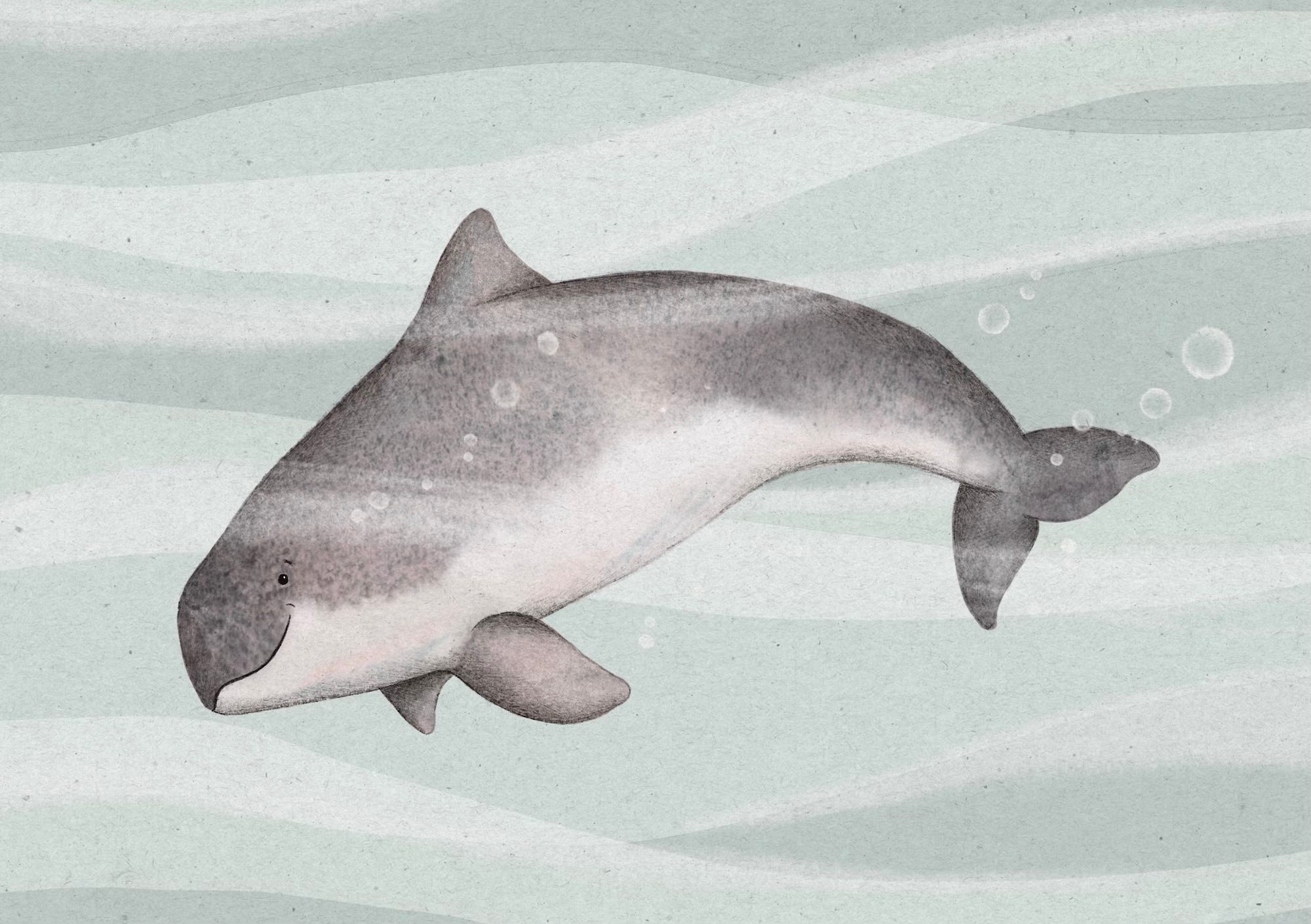
There is however a far more common cetacean found along the coast of my hometown, the harbour porpoise. About half the size of the dolphins and much rounder, with a shorter, less hooked dorsal fin and blunt snout, the two species should be easy to tell apart. But the reality is, many sightings are fleeting glimpses of a fin and the roll of a back amongst the waves, seen through shaky binoculars as I attempt to brace myself against the winds on the exposed beach. In the water, with nothing else in frame for scale, it’s not always easy to gauge the size of the animal. It’s likely some of those I’ve seen in recent years have been porpoises.
A younger me might have overlooked the porpoise as a less-exciting relative of the dolphins or whales I longed to see, but now I appreciate them for what they are. Adorably round and shy little cetaceans with their own interesting behaviours. Now when I scan the seas for a fin, I hope it will belong to a harbour porpoise so that I can say with absolute certainty I have observed them along the coast near my home town.