


In addition to my semi-regular ramblings about art angst, once a month I focus on a different animal that I have encountered. July’s is not a very seasonal animal, at least not for those of us in the UK.
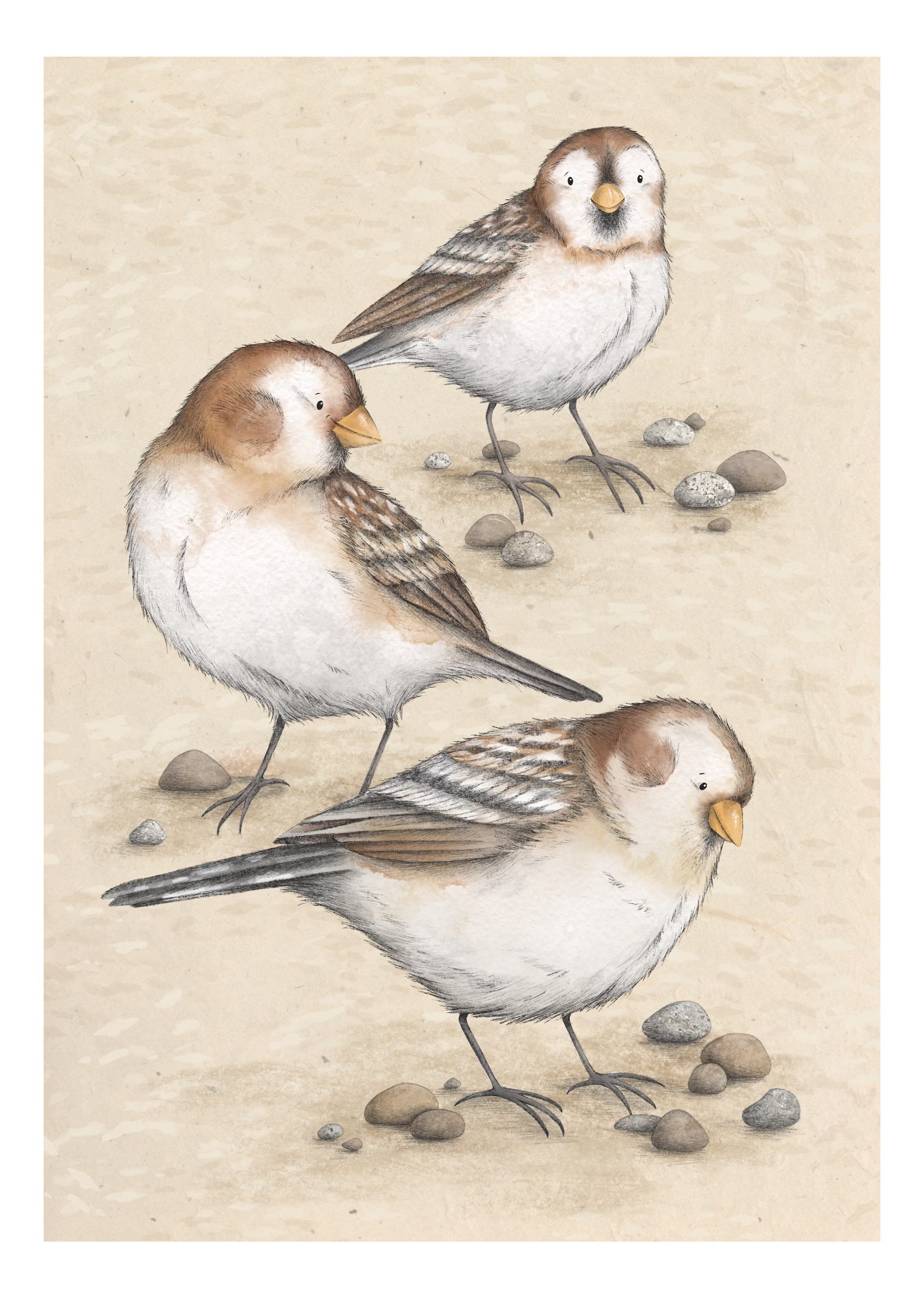
I first saw snow buntings before I knew them. Walking on my local beach, a vast sandy shore with pockets of quick sand, where the sea can be miles out at low tide, rushing in quickly as the tide turns, I spotted the movement of birds scouring the detritus of the tideline.
Small birds, perhaps a little bigger than a sparrow, but not much. They were not unlike turnstones in their clockwork toy movements and way of meandering through the line of broken shells, seaweed and driftwood. Similar too in their mottled brown, dark grey and white markings. But these were no wader.
I didn't have my binoculars with me so tried to capture them on my tiny point and shoot super zoom camera in the hope I might be able to zoom in on the image and identify the mystery visitors to my shore. But these birds were far more skittish than the much larger gulls, the dunlin and knot or the oystercatchers who were also to be found on the beach that day. Each time I thought I might be close enough to snap a photograph, they took to the air as a flock only to land a few yards further away or to double back past us in the direction we had just come from.*
In the end, unable to identify them and not wanting to disturb them in their feeding, I mentally classified them as what birders call ‘little brown jobs’. A name that is given to those small, nondescript species that, through lack of any unique features, can be difficult for new birders to put a name to. For me, all of the warblers fall into this category.
A couple of weeks later, I saw via social media, several local birders talking about the snow buntings on the local beach and only then did it occur to me that this could be the bird I’d seen. I knew of snow buntings, of course, and had even painted some in my sketchbook which made it into a print and a pack of stickers that I sold, so I knew what they looked like. But in my mind, snow buntings were a bird of Arctic and high alpine. They occupied the tundra regions, where they rubbed shoulders with Arctic hare and reindeer. They didn’t frequent the shore a mile or two from my house. (Also, despite knowing what a bunting is, for some reason I thought these ones would be bigger.)
I had to wait a year before I saw the birds again and could confirm they were very obviously snow buntings, wintering on our coast from their summer breeding grounds in the Scandinavia and Iceland. They also breed across the high Arctic from Alaska to Siberia, and in very small, isolated pockets of Scotland’s Cairngorm mountains. In the summer months, the mottled brown and white birds that I saw on the beach, would become more strikingly black and white, particularly the males. This colour change is not due to moulting and regrowth of breeding plumage, but the wearing down of the brown feather tips, revealing the crisp black colours below.
Somehow, putting a name to a species, can enhance our experience of it. On some basic birding level, there’s the satisfaction of adding a ‘tick’ to your list. But correctly identifying a species is also the first step in understanding it. Armed with a little knowledge about an animals’ natural history, you gain a new appreciation as you watch. These tiny birds, not much bigger than a sparrow had made a journey of some 2-3,000km to winter on our shores. Even more remarkable, the adults made that journey before the newly fledged young, who followed alone later, relying on the Earth’s geomagnetic field to find their way as they flew at night. And in a few short months they would make the return journey.
Meanwhile, I had learnt to identify a new species and there’s satisfaction in knowledge gained.
* It’s illegal to disturb snow buntings and generally unacceptable to disturb any wildlife. So just to be clear, I was not approaching the birds specifically or trying to get close to them but my path along the dunes took me parallel to where the birds were feeding. Each time they moved, it was only a short distance and we were soon able to pass and leave them to their hunt for food.
I love snow buntings. They come into my garden if it snows heavily. By the way, I got my Etsy order safe and well. It was a wonderful box of treasures and I will enjoy using and gifting everything. Thanks for making such super cute items.
That’s so cool that you spotted snow buntings! My friend has spotted painted buntings in her garden here in Fl, and I’d love to see them someday!